
Participating Communities
About the Planning Area
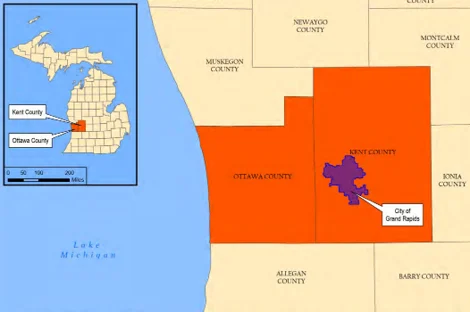
The Hazard Mitigation Plan (HMP) includes Kent County, Ottawa County, the City of Grand Rapids, and participating local jurisdictions within the two counties.
Although communities throughout the region share many common hazards, risks vary based on local conditions such as geography, development patterns, and infrastructure. For example:
- Urban areas may experience greater impacts related to stormwater capacity, infrastructure disruption, and extreme heat.
- Coastal communities may face risks associated with Lake Michigan shoreline flooding, erosion, and changing lake levels.
- Rural communities may experience different vulnerabilities related to agriculture, transportation networks, and access to services.
The planning process considers these differences while supporting a coordinated regional approach to reducing hazard impacts.
What Does It Mean to Be a Participating Community?
Participating communities are actively involved in the hazard mitigation planning process and contribute local knowledge about hazards, vulnerabilities, community priorities, and potential mitigation projects.
Participation generally includes:
- providing information about local hazard concerns and past events
- reviewing community capabilities, plans, and programs
- identifying completed mitigation activities and future priorities
- participating in opportunities to review and provide input on the updated plan
- considering adoption of the FEMA-approved Hazard Mitigation Plan
Participation in the Hazard Mitigation Plan helps communities:
- maintain eligibility to apply for certain FEMA hazard mitigation funding opportunities
- identify projects that may reduce future disaster impacts
- improve coordination between neighboring communities and regional partners
- incorporate updated hazard information into local planning efforts
- support long-term protection of residents, infrastructure, and community resources
For a full list of communities, click here.
HMP Update Process
1. Review Previous Progress
- Evaluate previous mitigation activities and identify changes since the last plan update.
2. Update Hazard Information
- Review historical events, current data, mapping resources, and changing community conditions.
3. Evaluate Community Vulnerabilities
- Identify people, places, infrastructure, and resources that may be affected by hazards.
4. Develop Mitigation Strategies
- Identify actions and projects that can reduce future risk.
5. Public Review and Feedback
- Provide opportunities for community members and stakeholders to review information and share input.
6. State and FEMA Review
- Submit the completed plan for review and approval.
7. Local Adoption
- Participating communities adopt the approved plan.
Project Timeline
The HMP update process began in May of 2026 and is expected to continue through June of 2027, depending upon the length of time required for FEMA review and approval. The current HMP expires in January of 2028.
Get Involved!
Community input is an important part of the hazard mitigation planning process.
Upcoming opportunities for public participation, meetings, and comment period will be posted on this website as they become available. The public comment period is currently anticipated to occur during the spring of 2027, during which a public meeting will be held.
Questions or comments about the HMP update can be emailed to Evie Murgia at emurgia@asti-env.com. Please include “Kent/Ottawa HMP” in the subject line.
The Hazard Mitigation Plan update is being led by Kent County, Ottawa County, and the City of Grand Rapids Emergency Management leadership. ASTI Environmental is supporting the communities by providing technical assistance, hazard analysis, mapping, stakeholder coordination, and plan development services throughout the update process.