Looking Glass River Mussel Survey
Portland, Michigan
- Client
- Fleis & VandenBrink
- Project Type
- Ecological
- Services
-
- Threatened and Endangered Species
- Mussel Surveys
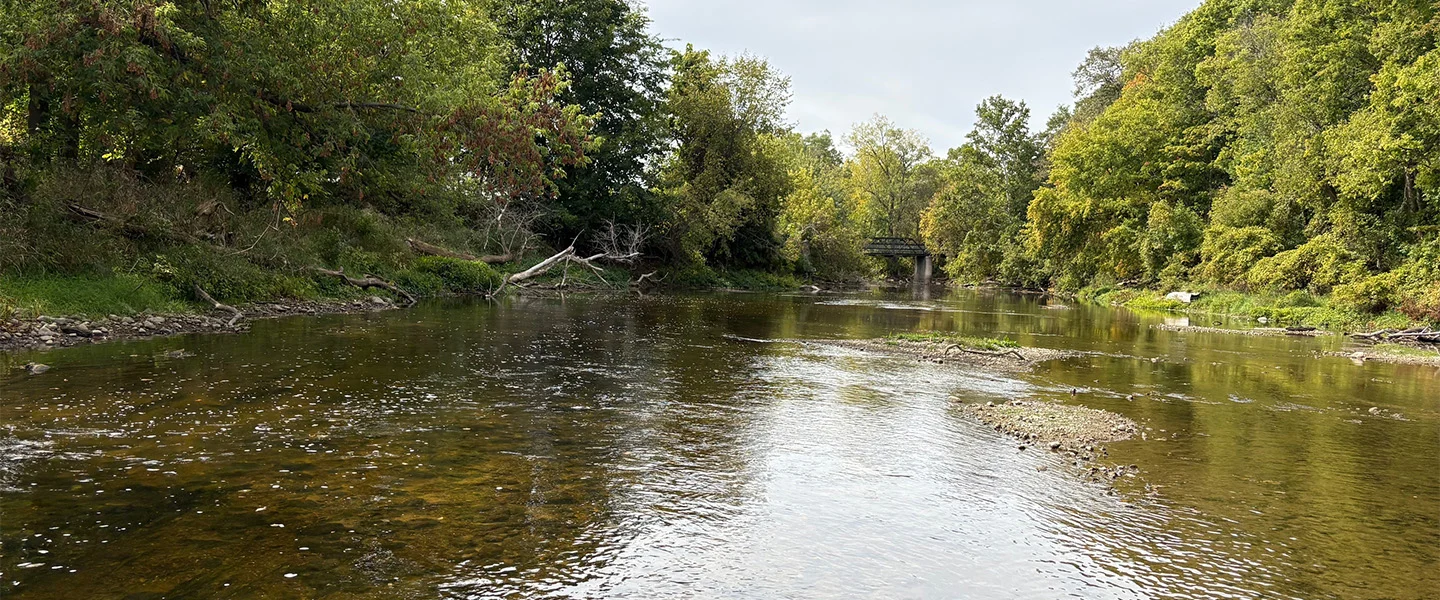
ASTI Environmental conducted native freshwater mussel salvage and relocation, along with post-relocation monitoring, within the Looking Glass River at the Divine Highway crossing in Portland, Ionia County, Michigan. The project was completed in conjunction with shoreline stabilization and infrastructure improvement activities. Mussel relocation was required due to the potential presence of state-listed mussels and resulted in the successful transplant of 136 live mussels representing nine species, including three state-threatened slippershell (Alasmidonta viridis) and more than 72 individuals classified as species of special concern.
The scope included planning and executing the salvage, relocation, and post-relocation monitoring of all live native mussels within an approximately 1,347 m² survey area to an MDNR-approved upstream relocation area. Tasks included mussel species identification, tagging and documentation, habitat assessment, and the safe transport of mussels to the relocation site. Compliance with the Michigan Freshwater Mussel Survey Protocols and Relocation Procedures was maintained throughout all phases of the project. Field efforts required careful adjustment due to existing infrastructure conditions, including a failing concrete bank structure and downstream channelization near the bridge crossing. Flow velocity and depth differentials associated with these conditions presented challenges that required adaptive survey techniques to maintain survey integrity while adhering to protocol guidance.
Additional considerations arose during post-relocation monitoring activities. Monitoring surveys included efforts to recapture relocated state-threatened, small-bodied slippershell mussels, which required targeted search methods. Low flow and drought conditions also altered flow regimes within the relocation area, necessitating further field adjustments while continuing to evaluate transplant success.